


Formal powers allowing Pembrokeshire County Council to potentially force the sale of problem long-term empty properties as a last resort, have been backed by senior councillors.
Long-term empty properties in Pembrokeshire are currently charged a premium council tax rate of 300 per cent for those empty for more than two years, effectively a quadruple tax bill.
A report for members on a draft empty properties strategy of 2025-30, was presented to Pembrokeshire County Council’s Policy and Pre-Decision Overview and Scrutiny Committee meeting back in November, where it was supported, with a formal decision to be made by the council’s Cabinet.
It said the strategy for scrutiny was an important strategic shift from a previous Cabinet agreed action plan as it introduced “the inclusion of an enforced sales procedure as a formal intervention tool when circumstances require”.

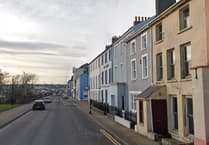


Members heard such a sale would only be considered if a long list of criteria had been met.
The report from Director Social Care, Housing and Public Protection, Gaynor Toft, presented to members stated: “The need to develop this Strategy was a priority that was raised within Pembrokeshire’s Housing Strategy 2024-2029.
“It is important to stress that this procedure is likely to be rarely used and only in cases where there is no other option but necessary due the extend of works that the council has had to undertake to make improvements to the property. The main focus will always be that of informal and supportive action with property owners.”
“Long-term, often problematic empty properties are considered a waste of a valuable resource which could be added to the pool of much-needed housing in the county. They can also frequently become blights to neighbourhoods by becoming targets for antisocial behaviour, trespass, vandalism and arson.
“In addition to this they can become eyesores which devalue nearby properties, become sources of harbourage for vermin infestations, and can also become significant drains on the resources of the county council, police, and fire and rescue services.
“Every effort is made to engage with owners, however, it is often the case that they are unwilling or unable to undertake the necessary work and therefore enforcement action may be considered,” it added.
It was stressed the enforced acquisition would not be used to pursue those who hadn’t paid the council tax premium.
At Pembrokeshire County Council’s Cabinet meeting of January 12, a report for members, jointly presented by Cabinet Member for Housing Cllr Michelle Bateman and Cabinet Member for Planning & Regulatory Services Cllr Jacob Williams, recommended they endorse the strategic plans, saying: “The use of the range of legal powers available to the authority will be in accordance with enforcement policy of best interests, and utilising the enforced sales route would be a last resort.”
Cllr Williams said any potential ‘last resort’ enforced sales would be dealt with on “a case-by-case basis,” adding it was likely to involve “a handful of properties,” rather than a widespread use of the powers.
Members unanimously backed the recommendation.
Comments
We've recently changed our login process. If you have an account for commenting, you will need to re-register on the login window.
This article has no comments yet. Be the first to leave a comment.