
More amazing discoveries on the Pembrokeshire coast's beaches have provided a fascinating insight into the lives of the area's hunter gatherers as many as 10,000 years ago. Ancient human and animal footprints were spotted by a National Park archaeologist at Newgale, while the remains of an aurochs, an extinct breed of wild cattle, were found at Whitesands by local man Shaun Thompson. The storms in early 2014 led to the loss of a great deal of sand from local beaches, uncovering the remains of ancient woodlands at many beaches, including Newgale, Abereiddi and Whitesands. The sand is gradually returning, but discoveries continue to be made around the coast. Pembrokeshire Coast National Park Authority's culture and heritage manager, Phil Bennett, said: "The footprints in the exposed peat at Newgale, which are most probably from the Mesolithic period around 10,000 years ago, suggest the humans may have been tracking a large hoofed animal such as an aurochs. "The discovery of the aurochs remains at nearby Whitesands would support this theory and the horns give you an idea of just how large these creatures must have been. "It has been a privilege to be an archaeologist working in Pembrokeshire during this time of discovery, but the weather and tides that uncovered these amazing clues to our past have also led to the loss of many of these sensitive resources. I'd like to ask anyone who finds anything interesting or unusual around the coast to contact me on 0845 3457275." The aurochs remains will now be conserved and it is hoped they will eventually be displayed publicly at Oriel y Parc Gallery and Visitor Centre in St. Davids.
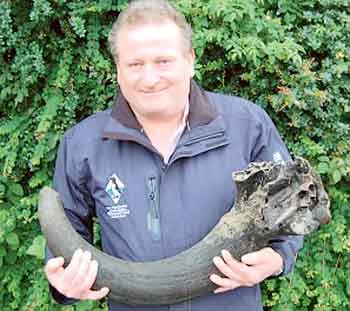
Pembrokeshire Coast National Park Authority’s culture and heritage manager, Phil Bennett, with one of the aurochs horns recently found at Whitesands beach.




More About:
Comments
This article has no comments yet. Be the first to leave a comment.