
Pembrokeshire People
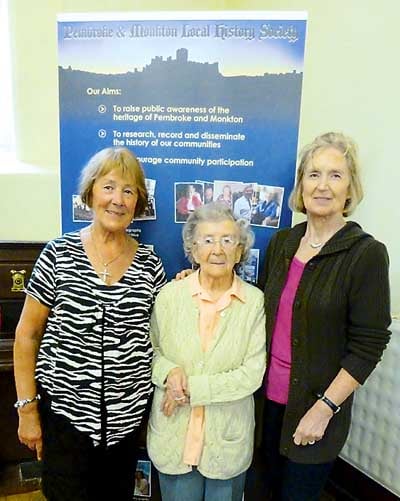
Despite the foul weather and so many competing events, it was good that so many turned out for our Friday evening talk. Testament I think to the popularity of our speaker, David James who came to talk to us about 'Pembrokeshire People'.
David's talk encompassed people who visited Pembrokeshire through the ages, the famous and infamous as well as some local characters. Two of the most interesting to me were the stories he told about the local connection with Japan.
The Japanese Connection



David told us that it all began with Admiral Hechahiro Togo. Japan in the 1850s ended a long Civil War and elected an Emperor from amongst the Samurai families. The Emperor highlighted the risk of invasion by China and Russia and applied to the Royal Navy to assist his country to modernise and industrialise. The sons of Samurai were sent to the Royal Naval College, Greenwich, to become Naval Officers. One of these men was Hechahiro Togo who graduated as a lieutenant and was sent to Pembroke Dock to supervise the construction of a 2,200 tonne corvette named Hiei. Construction took two years and during this period Togo lived in the Master Shipwright's house in the Royal Dockyard, Pembroke Dock.
Launch of the Hiei 1877
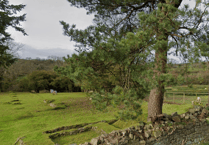
The actual construction of the ship was carried out in Jacob's Pill yard, off Lower Pennar, Pembroke, and the muddy Pembroke River. The remains of the yard can still be seen today. On the launch day on June 18, 1877, many dignitaries came down from London, including the Japanese ambassador Jushie Wooyeno Kagenori, Envoy Extraordinaire and Minister Plenipotentiary to his Imperial Majesty the Mikado of Japan, and members of the Japanese Embassy. Such was the prestige of the launch that among those present were Baron Reuter of Reuter's News Agency, Dr. Schliemann (discoverer of Troy), the British Admiral the right honourable Lord Clarence Paget, chairman at the time of the Milford Haven Shipbuilding and Engineering Company.
As the time for the launch approached, an immense procession was formed, and crowds came from long distances to witness it. Decorative arches were erected - the one in Hill Street, Bufferland, was surmounted by a dragon formed from wild iris leaves. This served equally as the dragon of Wales and as a compliment to the Ambassador by symbolising the emblem of the east. Visiting celebrities were certainly greeted in style in those days!
The Hiei was the first ship of the Imperial Japanese Navy and it was built here!
Of English fashions and tea services
Another Japanese connection David told us about, concerned the merchant ship Carmarthenshire which was built in Pembroke Dock by Long and Company on the site where the Library now stands. She was built for the Shire Line owned by David Jenkins, of London, who was born in Haverfordwest and named all his ships after the counties of Wales. Her first voyage was to take a cargo of 1250 tons of coal from Cardiff to Yokohama in Japan to replenish a Royal Navy coaling station.
The captain of the ship was named Hemsworth and he took along his wife and teenage daughter. On arriving in Yokohama, the ladies decided to go shopping and on stepping on to the quayside were almost mobbed by the curious Japanese ladies who had never seen European women before dressed in fashions and materials, so different from their own. The natural politeness of the Japanese was temporarily forgotten, unable to resist the temptation to feel the ladies clothes. Such was the impact of this visit that the Japanese potters made tea services upon which were painted the images of these ladies in their English crinolines!
Archaeology Day
We met up with David again the following day at the Pembrokeshire Coast National Park's Archaeology Day. David is well-known for his work with the West Wales Maritime Heritage Society, of which he is secretary. He, like us, was invited to participate in an exhibition to accompany this popular annual event.
Introduced by Phil Bennett and chaired by Polly Groom, of Cadw (formerly with PCNP), we enjoyed an interesting day of talks. It was certainly a varied programme.
The first speaker, Celia Thomas, spoke about how the natural environment can be better understood by looking at history and man's impact. Next, Mike Parker Pearson presented us with a fascinating report on research into Pembrokeshire's contribution to Stonehenge, and the discovery of the quarry at Craig Rhos y Felin which provides an exact match to some of the Stonehenge bluestones.
After lunch, Louise Barker and Toby Driver reported on one of our best preserved prehistoric landscapes - Skomer Island and Roger Thomas drew the day to a close with a fast forward to the 19th century with a look at the fortifications of Milford Haven. In particular, he reported on the work being done to restore the Chapel Bay fort to return it to its original state - I think we must try to arrange a visit there.
The day was organised by Pete Crane, archaeologist of the PCNP, and he was applauded for a truly enjoyable and interesting day.
Contact
If you have any stories or photographs for this column, please contact me, Linda Asman, on 01646 622428, email [email protected]">[email protected] and visit our website http://www.pembrokeandmonkonhistory.org.uk">www.pembrokeandmonkonhistory.org.uk
Comments
This article has no comments yet. Be the first to leave a comment.