
Tenby Walled Town Residents Association held an open meeting on Tuesday to discuss Pembrokeshire County Council's cabinet decision to introduce another experimental pedestrianisation scheme for the resort this summer.
The association agrees with the broad principle of pedestrianisation and supports keeping High Street and Tudor Square car free, but disagrees with the limits of access proposed.
Richard Walker, the association's chairman, told the meeting about Monday's cabinet decision to pedestrianise the walled town between the hours of 11 am and 5 pm from July 3 to August 31 and allow only those residents and visitors with off-street parking and some harbour users one return journey a day.
At the meeting, cabinet members acknowledged that the concerns of residents had to be resolved.


The association felt that as the access proposals were draft and a further consultation meeting had been promised, there was still hope that the association could influence the council.
Following the meeting, Mr. Walker, told the Observer: "We will pursue our renewed mandate to seek a Permanent Order for 2005, but in the meantime, we must persuade the county council to come up with a scheme that can be adopted in future years that allows reasonable access for all residents and businesses.
"The present concessions answer some of our access concerns, but are only a statement of principles and contained a disclaimer on authorisation of journeys."
As a result, the residents have voted to take the following points to the next consultation meeting:
1. While being grateful for the concessions on access granted to some, many residents felt they did not go far enough and were divisive. The meeting agreed that all residents should be treated equally by having an equal right of access, in particular the right to load and unload.
2. The limitation of one journey each day without prior authorisation needs to be flexible and dependent on circumstances, particularly businesses, bearing in mind that residents are responsible people and would always wish to keep journeys to a minimum. The continued alternative parking arrangements with designated spaces in car parks would aid this.
3. There was a call to introduce on-street residents parking permit spaces within the walled town and that the holders of these permits should at least be eligible to access permits in the present scheme.
4. Taxis should be allowed to operate within the walls to benefit visitors and residents without cars and those with restricted mobility.
5. Last year's chaos and traffic jams between 9 am and 11 am was clearly unacceptable, but this problem has not been addressed in the report to cabinet. A change to a 12 noon start or differentiation in restriction start times between cars and deliveries needs to be introduced.
6. Limit pedestrianisation dates to coincide with the state school holidays. Some parents had to fulfil journeys last year entirely related to school needs and were denied access: asthma attack, collect a child early on school's instruction etc..
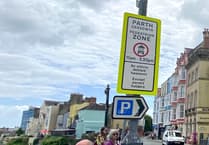
7. Clear signage advising people they are entering a fixed penalty area should be erected.
8. Proposed access restrictions could contravene the Disability Discrimination Act.
9. Provision to be made for courier deliveries.
10. Integrate the transport system with park and ride. Taxis rarely meet trains and are unable to take customers to accommodation within the walls under the proposed experiment.
10. A call for traffic surveys before, during and after the experiment detailing journeys within the walls.
11. The council needs a more flexible approach to allowing access for those servicing residents and businesses.
12. Doctors should be allowed access for all calls, not just emergencies as in 2003.
Mr. Walker added: "People forget that these restrictions on residents and businesses within the walls are unique and without precedent anywhere in the United Kingdom.
"The council has previously alluded to examples elsewhere that we have shown to be fictitious and now restrict themselves to self-congratulation on the success of previous experimental schemes.
"We trust the council will listen to the Welsh Assembly and have the courage to start planning for a permanent order for 2005."
Also discussed at the meeting was the proposed enhancement scheme for High Street and Tudor Square, which was warmly welcomed.
Members, however, were concerned with the extensive use of concrete cobblestones in the raised areas of road and voted to press for a tarmac surface.
It was felt that the use of cobbles was inadvisable following problems experienced elsewhere in the town and for aesthetic reasons.
Alistair Mackay will make this and other recommendations part of his report to the council.
Finally, the association also voted to work with Tenby in Bloom for this year's scheme, as this would attract community funding and help to promote the town by its residents.