
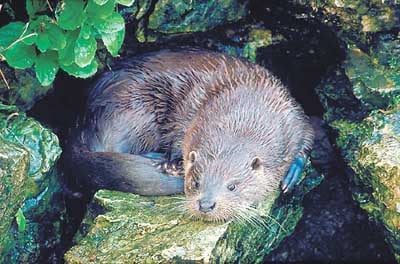
Fancy becoming a nature detective and taking part in a countywide survey to discover more about otter populations in Pembrokeshire? Pembrokeshire Biodiversity Partnership working with Pembrokeshire Marine Special Area of Conservation and Pembroke Millponds Action Group need your help in building up a comprehensive picture of otter populations and activity across the county. Otter populations have increased in Pembrokeshire since the '70s due to some toxic chemicals being banned, improved water quality and stronger protection of their habitats. To launch the project, Rob Parry from the Welsh Wildlife Trust will be giving a talk about the lives of otters and will explain how you can become an otter detective. The talk takes place at Foundry House Community Centre on Pembroke Commons on Saturday, March 24, 12.30 - 3.30 pm. After the talk, there will be an opportunity to visit Pembroke Upper Millpond to look for evidence of otters. You will also have the opportunity to meet Chris Lawrence, wildlife officer, Wildlife Trust of South and West Wales, who will explain about the conservation work that has recently been completed on the site. The Pembroke Millponds group is a sub-group of Pembroke 21C Community Association Ltd. One of the projects that Pembroke 21C is developing is the regeneration of Holyland Wood. This woodland borders the Upper Millpond and the newly completed boardwalk there gives the visitor access to areas that are frequented by otters as well as a view out over the upper pond. What does an otter detective need to look for? - footprints, spraints, lying up sites and even otter slides on stream banks. In his illustrated talk, Rob Parry will explain about the nature of otters and will be exhibiting evidence he has collected to allow the investigator to discover where the otters are living. If you are patient, otters can be seen at dusk on most of the rivers and tributaries in Pembrokeshire; they can also be seen in coastal areas where there is freshwater nearby. Otters have sleek brown fur with a paler underside, a long body with short legs, webbed feet and a long tail. It is best to find out where they are active by looking for evidence; it's often easier to spot footprints of otters on banks of rivers and spraints (faeces) which they leave in prominent places to mark their range. Remember, otters are given special protection under the Wildlife and Countryside Act 1981, so do not disturb them.

.jpeg?width=209&height=140&crop=209:145,smart&quality=75)


This event is free and open to all. To reserve your place, please contact Pembroke 21C on 01646 680090 or email [email protected]">[email protected]. Please bring suitable clothes and footwear for the site visit.