

Twenty years after the death of his mother, Prince Harry is no longer a little boy lost.
That’s according to newspapers across the world following his engagement to the American actress Meghan Markle.
But experts say his new-found happiness could also be attributed to seeking professional help after losing his mum - Diana, Princess of Wales - when he was just 12.
In a televised interview earlier this year, the 33-year-old prince revealed it had taken him almost two decades to address his grief after ‘shutting down all his emotions’.


Among those watching the programme with particular interest was Sara Hunter, a professional counsellor and founder of the Pembrokeshire-based community interest company MAMs (Mothers Affection Matters).
She said the prince’s willingness to speak publicly about his loss, as well as his need to seek help, had gone a long way towards breaking the stigma around ‘mental health’ issues.
“Mental health is simply the health of the mind, rather than physical health, and is equally important to our wellbeing,” said Sara, “whether the issues are triggered by bereavement, post-natal depression, domestic abuse, miscarriage or divorce.”
A mother of four herself, Sara set up MAMs after working as a counsellor in Pembrokeshire for a number of years.
“I worked with people from all walks of life, and I didn’t like what I could see was happening,” she said, “because loss of any sort causes trauma.”
And she says there’s a common thread running through most of the stories she hears.
“It is often the person’s relationship with their mother, as well as adverse childhood experiences, that has caused the pain,” she said. “The common denominator is ‘unmothered mothers’.”
It was this realisation that prompted Sara to set up MAMs, which was piloted through the charitable housing association Hafan Cymru in Haverfordwest.
“Our aim was to empower women through compassion, and become the voice of the voiceless,” she said. “We’re not there to assess or judge, we’re simply there to help and support predominantly single mothers.
“We listen to their stories and help them understand what they can do to help themselves. We also run a ten-week workshop which moves them from victim to empowered survivor.”
Since its launch, Sara has been joined at MAMs by fellow Pembrokeshire mum Katie Jones, who formerly worked on Welsh Assembly community projects.
And the two women say they are always looking for ways to raise much-needed funds.
“As a Government-regulated community interest company, we have been supported by Hafan Cymru housing association, the Police Commissioner’s Fund, the Domestic Abuse Forum, Gwalia Housing Association and the National Lottery, as well as smaller local organisations,” said Sara.
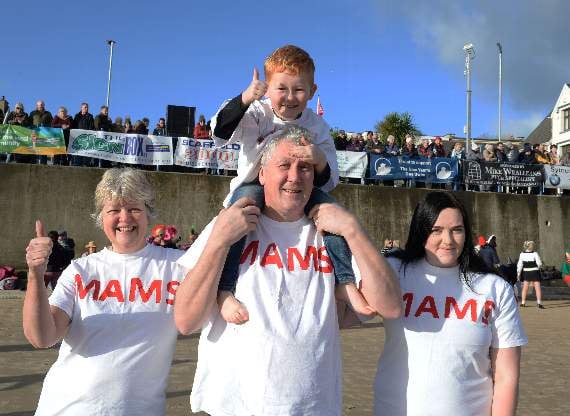
“We’ve also abseiled down Pembroke Castle, among lots of other fundraising activities, and taken part in the Saundersfoot New Year’s Day Swim.”
Sara has also written a book, Wings of Love – with illustrations by the Narberth-based artist Desmond Leeke – about two children being rescued from their ruined city by the mythical winged stallion Pegasus.
“It’s all about being delivered safely home on the wings of love,” said Sara, who hopes its sale will help extend MAMs’ work beyond its current workshops in Saundersfoot, Narberth and Haverfordwest.
“As well as offering immediate help to those who need it, our long-term vision is to create Cariad, a social housing hub where people could experience living as it is meant to be,” she said, “and that’s in a community with heart.”
For anyone who would like to buy a copy of Wings of Love, or find out more about the work done by MAMs, the website is www.mamsuk.org
A community interest company (CIC) is a type of company introduced by the UK Government in 2005 and designed for social enterprises that want to use their profits and assets for the benefit of the community.
Dyfed Powys Police chief constable Mark Collins says specific mental health calls have risen from 4,195 in 2012/13 to 5,428 in 2016/17 - an increase of 29 per cent.
Comments
This article has no comments yet. Be the first to leave a comment.