
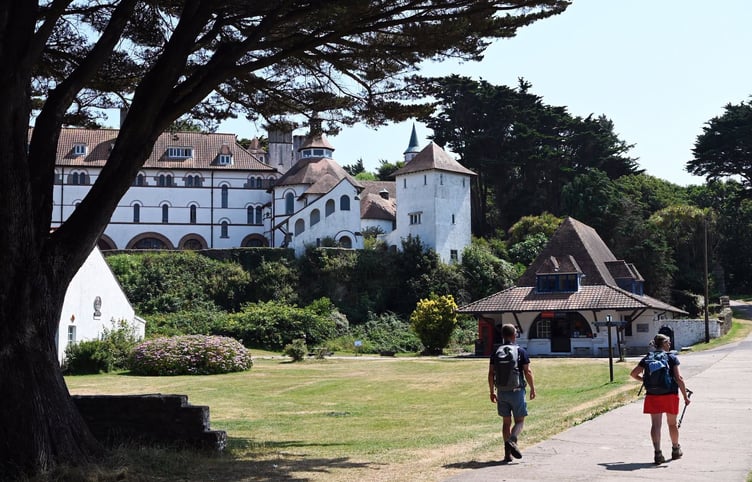
With historic allegations of abuse putting Caldey Island under the spotlight again, the Monastic island off Tenby has expressed ‘profound sorrow’ for the ‘suffering endured by survivors’ with significant changes made to safeguarding arrangements in recent years highlighted.
The release of an investigative podcast ‘Dark Island’ a new eight episode podcast commissioned by BBC Radio Wales explores a series of historic disturbing events within the close-knit community of monks living on the island off Tenby, which remains a popular destination for visitors and day-trippers.
The series (now available to listen to now on BBC Sounds) is presented by investigative journalist India Pollock, nine years after she first reported on the story.
Since then, she has continued searching for answers as to why a series of allegations of sexual abuse and assault involving monk Father Thaddeus Kotik went unreported to the police; how one of Crimestoppers' Most Wanted, Paul Ashton, was able to evade capture while living on the island for several years; and the other unsettling stories buried in the sand of the island's past.
One person to speak out in the podcast, is mum Natalie Roberts who was a regular visitor to Caldey from the early 2000s and would spend holidays on the island with her two sons.
She said that 78-year-old Brother Titus Keet would give her photos of himself posing naked on beaches on Caldey, often accompanied by a poem. He also shared photos with other women too she claims.
Back in 2016, Natalie said that she went for a walk from Caldey to nearby St Margaret's Island with her sons and a friend, but went onto reveal that Brother Keet was there, and when the monk was walking behind her, he repeatedly sexually assaulted her over her clothes.
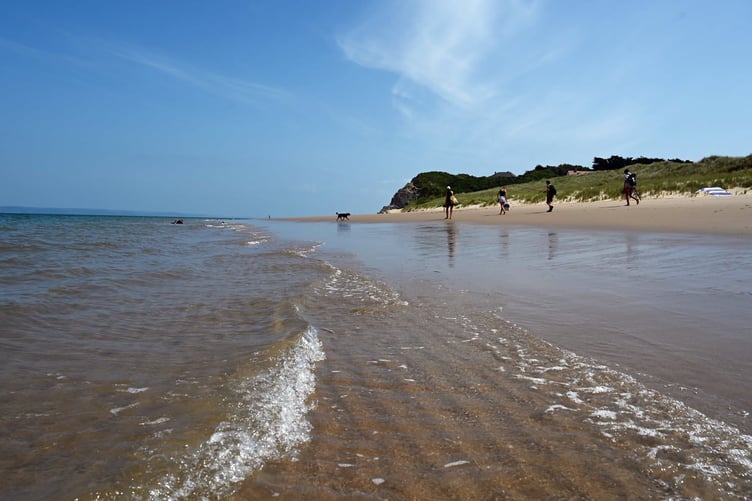
"I was so angry because I knew this was an absolute violation,” said Natalie.
"You know, this wasn't spiritual. This was his opportunity just to do that."


-Lucy-Owens-Amy-Belcher-(Darwin-Centre)-Lynette-Round-(Dragon-L.jpeg?width=209&height=140&crop=209:145,smart&quality=75)
She said she was stunned but did not say anything to Keet because she thought he would deny it and she might be asked to leave the island.
"I think the worst thing it did, if I'm completely honest, it took away my whole spiritual belief in Catholicism,” she continued.
There are also allegations of Brother Keet making several unwelcome sexual advances towards an employee of the abbey, but he has since denied the allegations, stating they were false.
The latest revelations come only a couple of years after an independent review into historical child sex abuse claims on Caldey Island revealed that a monk was able to rape children and subject them to great suffering for four decades, despite operating in “plain sight”
Dozens of people claimed they were sexually abused by a monk - Father Thaddeus Kotik whilst he was living on the island.
Father Kotik died in 1992 without facing any criminal charges into allegations he abused children between 1977 and 1982.
Six of his alleged victims were compensated by Caldey Abbey in an out-of-court settlement in 2017.
One witness - a teenager in the 1970s and some years older than the victims, described Father Thadd as - “creepy and instinctively kept away from him. He presented with a childlike manner of speaking, but I felt this was disingenuous as he could hold an in depth theological discussion. To my mind he was more a Michael Jackson type than Jimmy Saville. From about the mid-70s he worked in the dairy and would give gifts such as yogurts to children and families. I believe this made some families and children feel special by his attention and gifts.”
He died in 1992 without being interviewed, charged or convicted of any of his alleged crimes. He is buried in St David’s cemetery on Caldey.
The inquiry which was announced by the new superior at Caldey Island Abbey, Father Jan Rossey back in April of 2024, was led by Jan Pickles OBE, former Assistant Police and Crime Commissioner at South Wales Police; while former Deputy Children's Commissioner for Wales, Maria Battle was appointed as the safeguarding lead for the inquiry.
Pickles’ review revealed that the allegations dated back from the late 1960s to 1992; made by a group of victims who had all experienced abuse on Caldey Island as children. Some children lived with their families on the Island, others were visitors, some came every year for several years, others only once or twice.
They were often brought by parents or with parish groups from the mainland. Some had reported these allegations at the time, either to their parents who then usually, but not in all cases reported them to the Abbey, Carmarthenshire Police and priests in their home parish if they were visitors.
In some cases, victims who were not satisfied with the responses they had received, repeated their complaints several times. Few received responses they found to be satisfactory either at the time as children, nor as adults, years later.
The Review was undertaken largely due to the courage and determination of the ‘Caldey Survivors Group ’- adults who had as children stayed on the island either as visitors or as residents with their family and were there sexually abused.
As a group they have made plain to both the Abbey and the local community that the responses to their claims of sexual abuse over the years had lacked compassion and were felt to be derisory.
During the course of the review, twenty victims of child sexual abuse were identified, two victims were not approached due to concerns for their wellbeing expressed by family members, and one who had reported their experience of abuse earlier did not approach the Review. In total seventeen victims came forward to the Review.
The review concluded that there appeared to have been a failure of leadership at the highest level within the Order and Abbey; with serious matters of repeated and frequent allegations of child sexual abuse by Father Thadd - not reported to the statutory authorities as the law of that time required.

Poor record keeping and an absence of the identification and management of risk appears to have been the hallmark of the Abbey until recent years, as demonstrated following a recent allegation in 2017 of a non-recent rape by a visiting Irish priest or monk.
This allegation was investigated by Dyfed Powys Police, during which the then Caldey Island Safeguarding Lead admitted that due to the lack of records being kept of monks and others that had visited the Island it was not possible to identify either the monk or who had been resident on the island at that time, which encumbered the investigation.
The review found that there was a history of the Abbey failing to follow UK Safeguarding Legislation.
The Review identified an example in which the Abbey representatives in the past agreed to embed safeguarding arrangements and then did not.
Following the release of the BBC Wales podcast, broadcaster India said: "We wanted to create a series that could give a voice to victims, to piece all the parts of the island’s history together – and give people who’ve never heard about what happened on Caldey a chance to hear the entire story. And crucially, to ask who is responsible for what happened there.
"There are new allegations, exclusive interviews, and details that haven’t been heard before.
"Having worked on many stories and investigations over my 20 years as a journalist, the story of Caldey Island was one that still felt unresolved. The podcast was the perfect place to pull at the remaining threads and to find answers to those lingering questions."
Following the podcast’s release, in a statement, Allison Parkinson, whic is now Safeguarding Lead at Caldey ssaid: “The testimonies of those who suffered abuse on Caldey Island are deeply moving and painful to hear. We are profoundly sorry for what happened to them, for the terrible suffering they have endured, and for the failures of those who should have protected them.
“Listening to survivors describe their experiences, and the lasting impact on their lives, brings home the devastating human consequences of abuse. These are not simply events from the distant past.
“For those who suffered, the pain, trauma and sense of betrayal can last a lifetime, affecting their families and those they love.
“We are deeply saddened by what we have heard in the BBC podcast. We know that speaking publicly about such painful experiences takes enormous courage, and we are grateful to those who have found the strength to share their stories.
“We also recognise that hearing these accounts may be distressing for other survivors, including those who have chosen not to speak publicly.
“We cannot change what happened, nor can any apology take away the suffering that has been caused.
“But we can acknowledge that suffering, listen with humility and compassion, and accept our responsibility to ensure that the lessons of the past are never forgotten,” she continued.
She went onto say that in recent years, Caldey Abbey has made “significant changes” to its safeguarding arrangements, implementing all the recommendations of the independent review into historic abuse and continuing to examine and strengthen the measures in place to protect everyone who comes to the island.
“Most importantly, we have sought to ensure that survivors themselves have a genuine voice in shaping that work. Since 2024, a survivor has served on the Abbey’s Safeguarding Committee, and both the Abbot and our Safeguarding Lead meet regularly with survivors,” she continued.
“Their experiences, their concerns and their advice are helping us to build a culture in which safeguarding is everyone’s responsibility and the wellbeing of others comes before all else.
“We understand that trust, once broken, is not easily restored. We do not expect survivors to forgive, nor do we ask them to forget. We can only hope that, through our actions, our willingness to listen and our determination to do better, we can begin to demonstrate that things have changed.
“To everyone who suffered abuse on Caldey, and to those whose lives have been affected by that suffering, we offer our heartfelt sorrow. You deserved to be safe. You deserved to be protected. You deserved to be heard and believed.
“We are deeply sorry that you were failed.
“Your experiences will never be forgotten, and your voices will continue to guide our commitment to making Caldey a place of safety, dignity and care for everyone,” she added.
Support can be found at [email protected] and also: https://safespacesenglandandwales.org.uk/
A spokesperson for the ‘Caldey Island Survivors’ campaign also contacted the Observer, following the release of the investigative podcast.
“After seven long years, the campaign has achieved major systemic reform, and I am now 90% satisfied with the protections established on Caldey Island,” they stated.

The campaign states that its documented achievements over the last seven years include:
• An Independent Review: the publications of an independent review, conducted by Jan Pickles OBE
• Public Admission: Caldey Island authorities publicly admitted to the abuse on national television and in local and national newspapers
• DBS Mandates: Mandatory DBS checks for all monks, residents, and volunteers. Anyone staying on the island for more than ten days must clear a DBS check, or they are denied entry
• Movement Tracking: any monk leaving Caldey Island must sign off the island and sign back in upon return
• Public Interactions Restrictions: monks are strictly prohibited to interacting with the public during their time on Caldey Island
• Restructured Safeguarding Team: a dedicated team comprising the Caldey Island Safeguarding Lead, Pembrokeshire County Council, Welsh Assembly, the Abbott, as well as three survivors of abuse, during the summer holidays
• Guest House Policy: men and boys are prohibited from staying in the guest house unless accompanied by their partners for a verified family stay
• Therapy Funding: Caldey is currently funding therapy for any survivor who requires it.
The spokesperson continued: “These changes are a result of thousands of hours campaigning, alongside the immense bravery of victims and survivors.
“We are now moving into a charity for past, present and future of children and vulnerable adults abuse.”
Comments
We've recently changed our login process. If you have an account for commenting, you will need to re-register on the login window.
This article has no comments yet. Be the first to leave a comment.