
The return to school and university after the summer holidays is associated with excitement and the fun of catching up with friends old and new. But it is also a time to be more aware of health dangers including meningitis and sepsis.
Autumn typically sees a rising number of meningococcal meningitis cases, as teenagers and young adults gather and mix in education settings and social events such as crowded cafes and nightclubs.
Cases of this bacterial form of meningitis tend to peak during December to March, as the weather cools, driving more and more indoor socialising.
In many ways the spread of the disease is similar to flu or a cold. The bacteria can live harmlessly in the nose and throat and spreads through droplets of saliva or mucus. Spreading could be as simple as talking loudly or shouting close to someone in a noisy environment, sharing drinks or vapes, kissing, or even from shared living spaces.
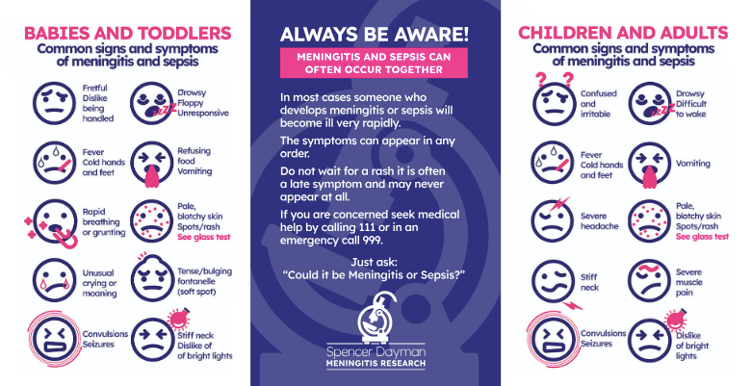
Meningococcal disease can cause meningitis, sepsis or both together. Understanding the symptoms of each can help ensure people seek urgent medical attention quickly.
Dr Steve Dayman, founder of the Spencer Dayman Meningitis Research charity, and founder of the UK’s Meningitis Movement, explained: “Meningitis and sepsis can strike quickly and symptoms can appear in any order. It is vital that parents and young people know what to look for. Symptoms can be hard to spot or can look like flu or a hangover.
“Early diagnosis and treatment can mean the difference between life and death.”
Vaccination is helping to reduce cases of meningococcal disease but does not protect against every type of meningitis or every cause of sepsis.
Sepsis affects an estimated 245,000 people in the UK each year and contributes to around 48,000 to 50,000 deaths annually.
Research shows that teenagers and adolescents are more likely to carry meningococcal bacteria and are at increased risk of spreading the infection with up to 1 in 4 teenagers carrying meningitis-causing bacteria in the back of their throats, compared to 1 in 10 in the general population.




As well as causing deaths, meningitis can leave those infected with long-term health conditions, such as hearing or vision loss, and problems with memory and movement.
The Spencer Dayman Meningitis Research charity has developed a free pocket-sized symptom card checker and dispenser that can be placed in schools, universities, workplaces, GP surgeries, libraries, community areas, sports clubs, or anywhere people may benefit from quick, clear information.
Dr Steve Dayman has been involved with the meningitis cause for 44 years since losing his 14-month old little boy Spencer in November 1982 to meningitis and sepsis.
He said: “Public awareness is a constant battle and I know of numerous cases where lives have been saved due to early diagnosis and prompt treatment. Carry a wallet-size symptom card, it could save a life. Having accessible information nearby helps keep awareness visible, practical and easy to share.
“We encourage eligible young people to ensure that they receive the 2-dose vaccination being offered by the NHS ahead of the 2026 academic year. You can get this in a pharmacy that offers MenB vaccines for young people.”
If you would like to receive a free dispenser, contact: [email protected]
Comments
We've recently changed our login process. If you have an account for commenting, you will need to re-register on the login window.
This article has no comments yet. Be the first to leave a comment.