
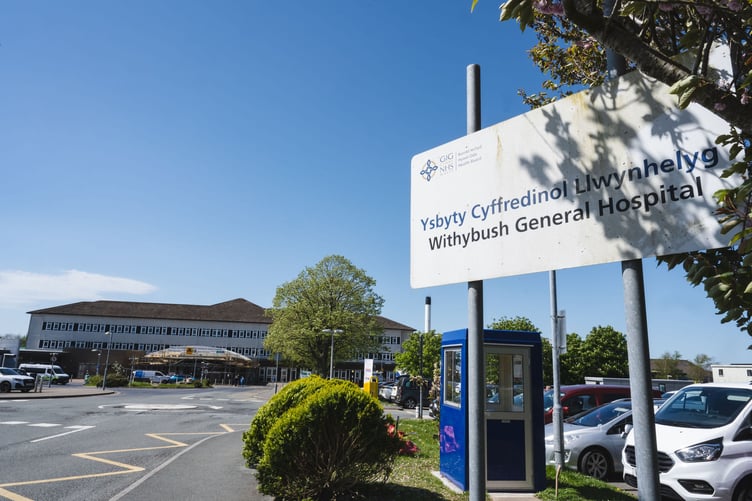
Hywel Dda University Health Board is sharing the findings of its consultation on the future of stroke services ahead of its Board meeting later this month. The report includes feedback from across Carmarthenshire, Ceredigion, Pembrokeshire and neighbouring health board areas and sets out what matters most to the people who took part.
More than 3,000 people shared views in the Health Board’s consultation on a preferred option for the future of stroke services. Running from 28 May to 26 July 2026, the consultation received more than 700 questionnaire responses and included over 120 events and engagement activities.
The feedback is set out in the Phase 2 Stroke Consultation Report and will be considered by the Board, alongside feedback from the first phase of consultation and a broad range of additional information, at its meeting on 26 November.
This includes responses linked to stroke services gathered through the Clinical Services Plan consultation in summer 2025, the latest clinical evidence, data and impact assessments. Together, this information will help inform the decision of the Board on the future of stroke services across Hywel Dda.
The Phase 2 Stroke Consultation Report is available online at: https://hduhb.nhs.wales/StrokePhase2-report
Stroke services are fragile and currently do not meet national clinical standards. The need for change is driven by evidence that patient outcomes are improved when stroke specialist services are concentrated in centres with access to the full range of expert teams and specialist equipment.
Throughout the consultation staff, patients, families and carers shared their personal experiences of stroke services and the life altering impact a stroke can have.
A participant who shared her experience is Ruth Evans from Narberth, whose mother experienced a series of transient ischaemic attacks (TIAs), and explained: “Having had my mum, who is 90 years old, suffer three TIAs (Transient Ischemic Attack) or ‘mini strokes’ within a week and going to hospital - the difference in having a TIA in working hours and having one outside of specialist stroke cover, gives the patient a completely different experience.
“I first took her into Withybush Hospital on a Thursday, during the daytime, and we saw the stroke specialist, the care we had was amazing.
“However, when we went on the Saturday, it was completely different. We had a much better pathway to stroke care on our first visit on the Thursday.


“Luckily, my mother is on the mend, and the stroke consultant in Withybush has been fantastic. It’s difficult if you can't see your loved ones, but then at the end of the day, what's more important, seeing them, or them having the best care.”
Stroke services are currently provided at Bronglais, Glangwili, Prince Philip and Withybush hospitals. However, these services do not consistently meet national clinical standards and there is no specialist stroke cover available 24 hours a day, seven days a week.
As in the current pathway, under all options being considered, people with a suspected stroke would still go to their nearest suitable hospital for initial assessment and treatment, if needed, before any transfer to a specialist stroke unit. If specialist treatment such as a thrombectomy is needed, patients will continue to be transferred to specialist centres in Bristol or Cardiff.
Getting the right care quickly gives people the best chance of recovery. Over time stroke care has advanced significantly, and evidence shows that patients have better outcomes when they receive care in specialist stroke units with access to expert teams and specialist equipment.
Lee Davies, Executive Director of Strategy and Planning at Hywel Dda University Health Board, said: "Across Hywel Dda, we need to improve access to specialist stroke care, so our services are safe, sustainable, accessible and kind for patients and staff.
“I would like to thank everyone who took the time to participate in this consultation and share their views on the future of stroke services. This includes colleagues, patients, carers, stakeholders, community organisations and campaign groups. The views, experiences and evidence shared have made an important contribution to the conscientious consideration process.
“Conscientious consideration is based on the Gunning Principles, which help ensure public consultations are carried out fairly and lawfully. It is a process that takes place so that views shared during the consultation are properly considered before decisions are taken.
“The consultation report reflects a wide range of opinions and experiences, and the feedback received has provided valuable insight into the issues that matter most to our communities.
"We know that the consultation report contains a lot of information, and we are publishing it now to give people the opportunity to read the findings ahead of the Board's consideration on the future of stroke services later this month.
“We recognise the strength of feeling and interest in these proposals, and I would like to reassure people that no decision has been made. Whichever option is chosen, the initial assessment and treatment of a suspected stroke would remain unchanged. The proposals focus on the specialist stroke care that follows."
The Board papers and a link to the live broadcast of the meeting will be available on the Health Board’s website on Friday 20 November 2026.
For further information about the stroke services Phase 2 Consultation, visit the Health Board’s stroke consultation webpages: https://hduhb.nhs.wales/stroke-consultation
Comments
We've recently changed our login process. If you have an account for commenting, you will need to re-register on the login window.
This article has no comments yet. Be the first to leave a comment.