

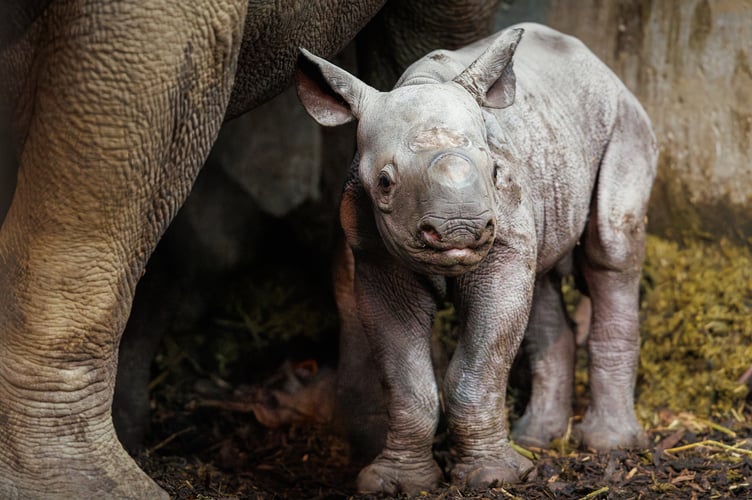
Folly Farm has given its newly born baby rhino a strong Welsh name!
The zoo in Pembrokeshire is celebrating the birth of another critically endangered eastern black rhino calf.
This is the second rhino calf to be born at the family-run zoo located in Begelly, and the second in Wales as part of a managed breeding programme through its membership with EAZA (the European Association of Zoos and Aquaria).
“Introducing -Rhodri the Rhino - brother of Glyndŵr and son to Dakima and Nkosi,” Folly farm shared.



“Of course we’re leaning into the Welsh name theme. The name ‘Rhodri’ is derived from the Welsh language and symbolises strength, leadership and resilience.
“It’s a timeless and respected name, embodying a strong connection to the land and its people.
“So, when the time comes for this important animal to move on from Folly Farm, to continue the breeding programme for the critically endangered species elsewhere - we want him to take his strong Welsh roots with him!”
After a 15-month long pregnancy, mum Dakima gave birth to the healthy male calf on Thursday, November 29.
With only an estimated 39 eastern black rhinos born in the UK in the past 25 years, it’s a significant achievement for the captive European Endangered Breeding Programme (EEP) for black rhinos.
Eastern black rhinos are classed as critically endangered due to poaching and loss of habitat. There is thought to be an estimated 1471 Eastern black rhino left in the wild and around 109 in zoos across Europe, including Folly Farm’s newest addition.
The calf made its appearance at 6.34am and within a couple of hours was standing up, following mum around the enclosure and had started suckling.
12-year-old eastern black rhino Dakima arrived at Folly Farm in May 2017 as part of a European breeding programme and met her mate, 14 year-old male Nkosi. Mating rhinos can be unpredictable, but their relationship blossomed and Dakima gave birth to her first calf at the start of 2020.
Male calf Glyndŵr was Dakima’s first born and the first rhino calf to have been born in Wales.
Glyndŵr was named after Folly Farm’s Founding Director, the late Glyndŵr Williams, and has since moved onto another animal collection to continue the breeding programme for the species.
Eastern black rhinos are solitary animals and therefore usually reside in their own paddocks. But when the time was right, Dakima and Nkosi were reintroduced again for some carefully planned ‘date nights’ - and keepers predicted she fell pregnant sometime in August 2024.
After having Dakima’s stool sample analysed at a specialist lab in Chester Zoo, it was confirmed that baby number two was on the way.
Conservation Officer, Jack Gradidge, said: “Dakima was a great mum with Glyn so it’s wonderful to see these instincts are still just as strong the second time around. She’s being very protective of her new baby, showing they have a strong bond already.
“This is such a monumental event for all the staff here and the zoo team have worked incredibly hard to create an environment where the rhinos felt comfortable enough to mate.
“Not only is this calf helping to increase numbers of a critically endangered species, he’s also the second rhino ever to be born in Wales – with his brother being the first!”
Along with other zoos across Europe, Folly Farm is part of a breeding programme to help increase the numbers of Eastern black rhino in captivity and, ultimately, the wild.
Folly Farm’s rhino keepers will monitor mum and baby closely over the coming weeks and they will be back out in the enclosure in due course.
Comments
We've recently changed our login process. If you have an account for commenting, you will need to re-register on the login window.
This article has no comments yet. Be the first to leave a comment.