
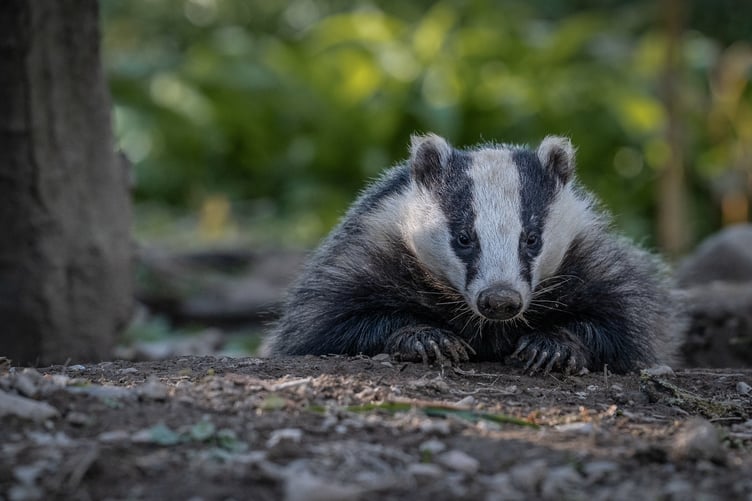
The Welsh government have outlined their new approach to eradicating bovine TB. This will be "evidence-based and science-led", and while there will be no mass, non-selective cull of badgers, culling was not ruled out.
On Tuesday, November 24, Cabinet Minister for Rural Resilience and Sustainability Llŷr Gruffydd published the Welsh Government’s long-awaited response to recommendations from the Bovine TB Eradication Programme Board.
While confirming that Wales will not introduce the widespread, England-style culling that has killed hundreds of thousands of badgers since 2013, the response states that ministers intend to carry out further fieldwork and population surveys. Crucially, it leaves open the possibility of trapping badgers, testing them for bovine TB, and either vaccinating and releasing them or "removing" them from the population.
Mr Gruffydd stated: “Bovine TB remains one of the most serious animal health challenges facing Wales. For farming families, a TB breakdown can mean months or years of restrictions, uncertainty and difficult choices.
“Nearly 96 per cent of herds in Wales are now TB free. However, on current progress, Wales is unlikely to be Officially TB Free by 2041.”
He continued by saying: "We will not stand by while farmers face uncertainty and anxiety, nor will we pursue a mass non-selective cull. Instead, we will be taking evidence-based and science-led action."
Wildlife protection organisation Protect the Wild has welcomed the ruling out of a mass, non-selective badger cull in Wales, following months of sustained public pressure. However, the organisation warns that the fight to protect badgers is not over, as ministers have left the door open to the targeted killing of badgers.
Protect the Wild emphasises that bovine TB is already declining in Wales without a cull. According to the Welsh Government’s own figures for the year to June 2026, new cattle herd TB incidents fell by 22.6 per cent, cattle slaughtered following testing dropped by 22.6 per cent and 95.7 per cent of Welsh cattle herds were officially TB-free.
The announcement follows an intensive campaign by Protect the Wild, Dyfi Badger Group, Badger Trust, scientists, local campaigners, and tens of thousands of members of the public - including a Senedd petition opposing culling that garnered over 28,000 signatures and a protest outside the Senedd earlier this month.
Rob Pownall, Founder of Protect the Wild, said:



"With Welsh Government data showing that bovine TB is already falling significantly without culling, ministers must now reject any new lethal programmes and focus entirely on non-lethal solutions—including stronger biosecurity, better cattle testing, and vaccination."
Protect the Wild is calling on the Welsh Government to ensure full transparency regarding its upcoming wildlife research and to commit permanently to non-lethal bovine TB control measures.
Meanwhile, Countryside Alliance Wales has praised the new approach, describing it as "common sense".
Rachel Evans, Director of Countryside Alliance Wales, commented:
“This approach is basic common sense, and we welcome it. We must protect our farmers and their cattle, and that means following the evidence wherever it leads, taking whatever steps it shows are necessary to eradicate this devastating disease.”
Comments
We've recently changed our login process. If you have an account for commenting, you will need to re-register on the login window.
This article has no comments yet. Be the first to leave a comment.