

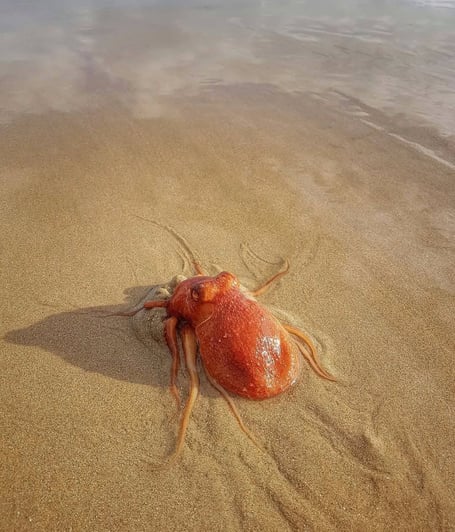
HIDDEN Pembrokeshire’s Gareth Davies certainly didn’t expect to come across this beautiful octopus at low tide on North Beach in Tenby. He said:
“I love seaside walks because you never know what might turn up to surprise you. It was fascinating to watch as it began to bury itself in the sand and change colour. With the tide returning quickly, it soon vanished from sight.
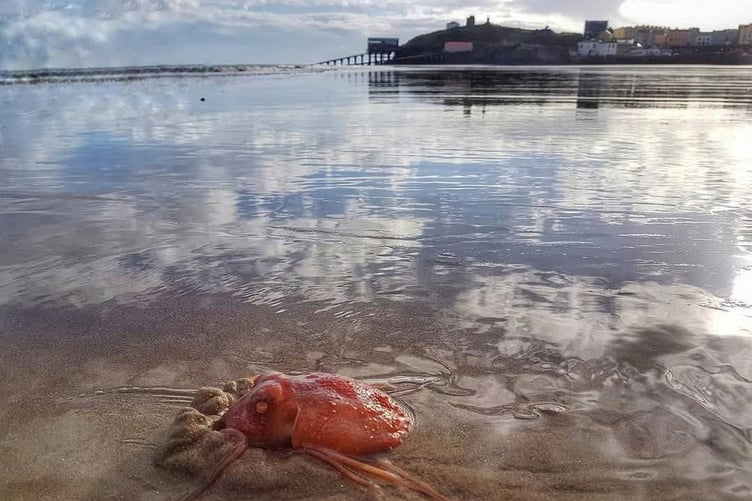
“The common octopus is a highly intelligent and active predator, equipped with a secret weapon, specialised glands that produce venom to incapacitate its prey.


-(c)-RSPB.jpeg?width=209&height=140&crop=209:145,smart&quality=75)
“Octopuses are related to squid and cuttlefish and belong to a group of molluscs known as cephalopods. They have eight arms attached directly to their head, each lined with a double row of suckers. Their soft, bag like bodies allow them to squeeze into the smallest spaces, helping them avoid predators or ambush prey. Crabs are a favourite food, and a pile of empty crab shells often signals that a well fed octopus is nearby. These shell piles are known as a midden.
“Octopuses are usually less active during the day, which is why they are easier to spot on night dives. True masters of camouflage, they can change both colour and texture depending on their mood or surroundings.”
While regular sightings of octopuses are rare, they do appear occasionally, during mild winters or washed ashore by big swells or strong currents. Organisations like Sea Trust in Pembrokeshire welcome reports of marine life sightings.
Comments
This article has no comments yet. Be the first to leave a comment.