
A GRAZIER has helped create a unique approach to wildfire prevention with a community cow-sharing scheme.
The Gower Commons is one of the most significant lowland heathland areas in the world, but each spring it goes up in flames killing animals such as ponies, and burning bird nests and carbon-storing peat.
Penmaen grazier Emma Douglas links the increase in wildfire severity with a decline in graziers on the commons, with cattle playing a crucial role in keeping the flammable molinia (purple moor grass) at bay.
Due to bovine TB restrictions and the dangerous nature of grazing on commons with increasingly busy roads, the 40-year-old has watched the slow “abandonment” of the land by graziers and their herds.
A few years ago, Emma decided to do something about this, collaborating to establish a Community Supported Agriculture group, Cowtan (Cow Fire), pooling funds to buy a herd for the commons, reducing the molinia and in doing so, boosting the biodiversity of the protected landscape.
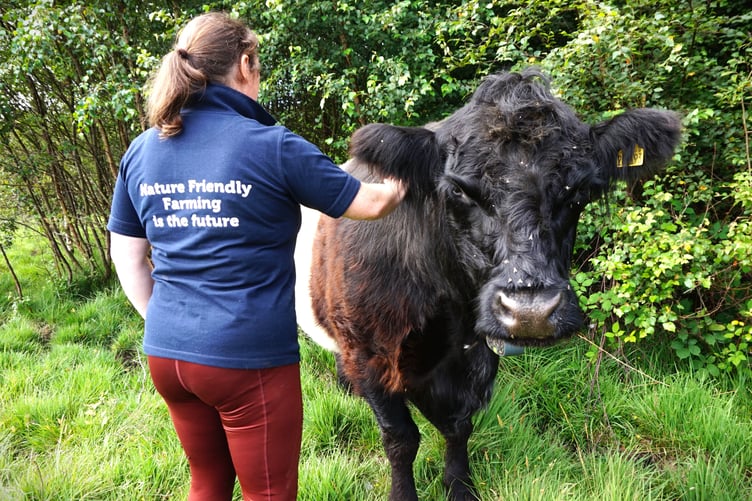
The multi-generation farmer said: “It’s a passion project.
“It’s rewarding to see people who have never had access to cattle becoming confident in handling cattle and spreading the word about how important livestock are.
“There’s a narrative that livestock are terrible for the environment, so I made it a mission to display good practice to change people's minds.
“Being able to share good, nutritional, quality beef affordably completed the circle, bringing people in and doing good work bringing species back from the brink of extinction.”


The health of the Gower Commons is at a crossroads - the majority of the 70km² commons are Special Areas of Conservation and Sites of Special Scientific Interest, and the complete loss of graziers could be “catastrophic” for the habitat.
Wildfires in the Gower and across Wales are increasing, with 2025 seeing a 275 per cent increase in grass fires on 2024, the majority of which were deliberate.
But they’re difficult to graze, with over 100 livestock killed on the roads in a single year and a high-risk area for TB, requiring costly testing every six months.
In the backdrop of farmers facing huge economic challenges - a 2025 UK report found that farmers' income has been stagnant since the 1970s - different thinking is required.
As Emma’s farm herd goes in and out of TB areas, to exercise her ancestral commoners’ rights she needed to source a separate herd.
Working with the founders of another nearby Community Supported Agriculture (CSA) scheme, Cae Tan, one of the first of its kind in Wales, Emma and a group of volunteers created Cowtan, allowing residents to share the same financial risks farmers do and, in turn, share in the rewards.

The shareholders get a share of beef at the end of each year and attend an annual community meal.
They also share responsibility for the herd, checking on them, supporting TB checks, and sharing in any financial loss.
Tanya Nash’s house backs onto Fairwood Common and has endured it becoming completely surrounded by fire.

The 56-year-old PhD student is responsible for checking on the herd, which she described as “life-affirming”: “I’ve always wanted to support local producers because I think it's important to keep our wealth local if we can.
“I don’t have time for my own herd, so this seemed like the next best thing.
“It’s had a massive positive impact on my life. “If something goes wrong, you’ve got five people rocking up to help you.
“There’s a real bond around a common cause.”
The commons are managed by the Wildlife Trust of South & West Wales.
Paul Thornton, Reserves Manager at the Trust said: “The commons of Gower are very important habitats. The decline of grazing, particularly of cattle has caused significant changes to these habitats with areas becoming dominated by Gorse, Bracken and Molinia (Purple Moor Grass) all contributing to increased fuel load in event of wildfire.
.jpeg?trim=0,547,0,545&width=752&height=501&crop=752:501)
“Cattle grazing can help break up the vegetation, creating a mosaic of habitats and increasing the opportunities for less dominant plants to thrive. This increases habitat diversity and biodiversity. Schemes such as Cowtan are innovative solutions to increasing cattle numbers on the commons. This scheme brings multiple benefits - habitat management, people engagement, public awareness and high welfare, local provenance food production.”
The cows are one of the few species that will eat molinia, which when dead in spring is incredibly dry and flammable. The grass also bounces back quickly after fires, whilst other plant species may struggle or die out, meaning that more fires often mean more molinia grass.
The cows trample flammable bracken and gorse and create depth in the plant layers, allowing other plant species, buglife, and ground-dwelling animals to thrive.
Emma has seen an increase in biodiversity in the areas grazed, including heath spotted-orchids and devil’s-bit scabious - food of the endangered marsh fritillary butterfly.
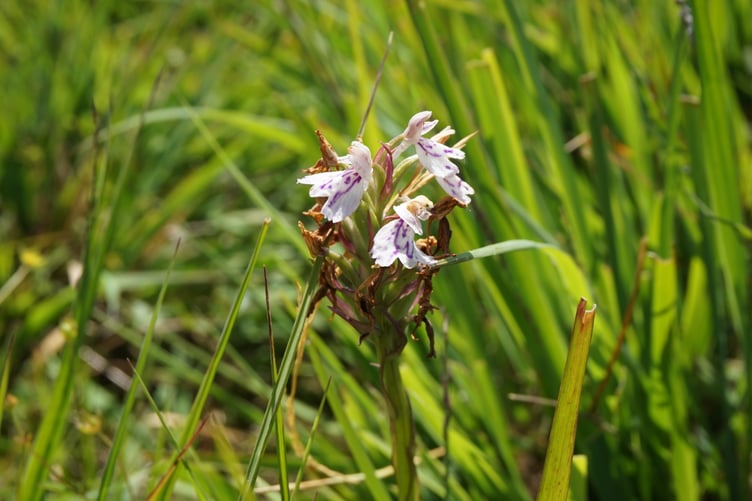
Despite the benefits of conservation grazing in protecting the landscape, there’s no financial benefit. Emma is calling on the government to recognise this work: “We really need the government to respect that and help us out, whether that’s cutting the red tape around TB testing or financial support.
“Farming doesn’t make a profit these days; if it does, it’s small.
“The government needs to build access to the commons to manage it appropriately.”
Mid and West Wales Fire and Rescue Service has observed the increase in frequency and severity of wildfires as driven by climate change and land-use pressures, with the extreme heat in June and July heightening wildfire risks.
.jpeg?trim=0,323,0,322&width=752&height=501&crop=752:501)
In December, they launched a Wildfire Plan which included leveraging the new Sustainable Farming Scheme to “embed wildfire prevention into everyday land management”.
Despite research finding that moderate grazing can decrease wildfire risk, the Welsh government declined to comment on whether it would offer support to conservation graziers.
A spokesperson for the Welsh government was “committed to achieving a TB-free Wales” and that farmers working in collaboration with vets on biosecurity measures was the path to achieving this.

Comments
We've recently changed our login process. If you have an account for commenting, you will need to re-register on the login window.
This article has no comments yet. Be the first to leave a comment.