

Politicians in Pembrokeshire are calling for funds from scrapped Police and Crime Commissioner roles to enhance rural policing in Pembrokeshire and across West Wales.
Local Senedd Members Paul Davies and Samuel Kurtz are asking for the money saved from the abolition of Police and Crime Commissioners to be directed straight into frontline policing and crime-prevention initiatives across their wards.
With the UK Government recently confirming that PCCs will be scrapped, significant savings will be released from the current system of governance.
The two Welsh Conservative Members of the Senedd argue that this funding must not be lost in national Westminster budgets — but instead be channelled into communities that need it most.




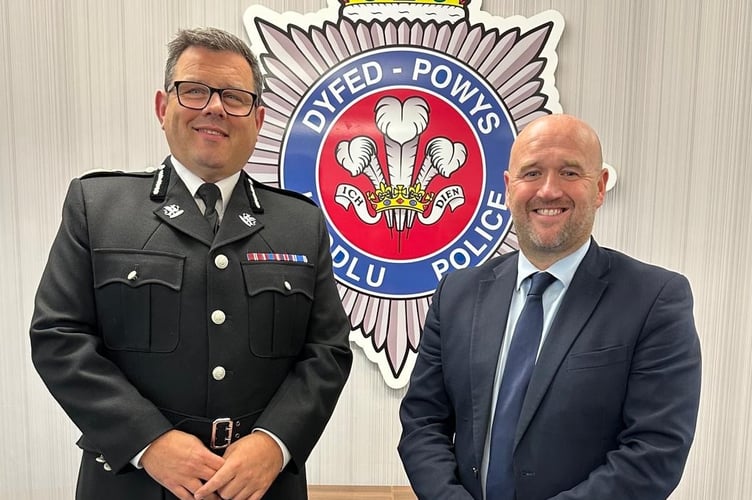
Dafydd Llywelyn is Dyfed-Powys Police's current commissioner, earning £68,202 a year.
Carmarthen West and South Pembrokeshire Senedd Member, Samuel Kurtz said of the situation: “The end of the Police and Crime Commissioner system means millions of pounds will be freed up. That money must be spent where it can make the most difference — directly in our communities.
“In West Wales, we need more feet on the street, we need to boost local policing resources and provide proper support for the groups working hard to prevent crime before it starts.”
“This seems like the perfect moment to strengthen our policing team to help residents feel protected and safe in our towns and rural communities,” he added.
Both MSs highlighted the pressures facing rural areas, including farm thefts, machinery crime, anti-social behaviour, and incidents that require specialist policing often stretched across large geographies.
Preseli Pembrokeshire Senedd Member, Paul Davies said: “Rural crime hits communities hard, yet too often feels overlooked. Whether it’s livestock theft, vandalism, or targeted farm crime, the impact on livelihoods is real.
“The money saved from scrapping PCCs should support proper rural crime teams, improved response times, and better protection for our towns and countryside.”
Both are jointly calling for the savings to be directed into four key priorities:
• More visible policing in Pembrokeshire and West Wales - Increasing officer numbers on the beat — improving confidence, deterrence, and local response.
• Strengthened rural crime teams - Investment in specialist officers and equipment to tackle farm thefts, machinery crime, wildlife crime, and rural anti-social behaviour.
• Support for community-led crime prevention programmes - Funding for local initiatives, charities, and youth organisations that reduce crime by engaging young people and supporting vulnerable groups.
• Investment in early-intervention and youth services - Creating positive opportunities for young people, helping prevent crime at its source by addressing isolation, lack of facilities, and rural disadvantage.
Kurtz and Davies emphasised that communities in Pembrokeshire and West Wales must feel real benefits from national reforms.
Mr Kurtz concluded: “Scrapping PCCs must mean more than removing a tier of governance. It must mean real investment in local policing and safer communities. Pembrokeshire and West Wales deserve their fair share.”
Whilst Mr Davies added: “This is a once-in-a-generation chance to put resources where they matter most. We will be making the strongest possible case that rural Wales must not be forgotten.”
Comments
We've recently changed our login process. If you have an account for commenting, you will need to re-register on the login window.
This article has no comments yet. Be the first to leave a comment.