

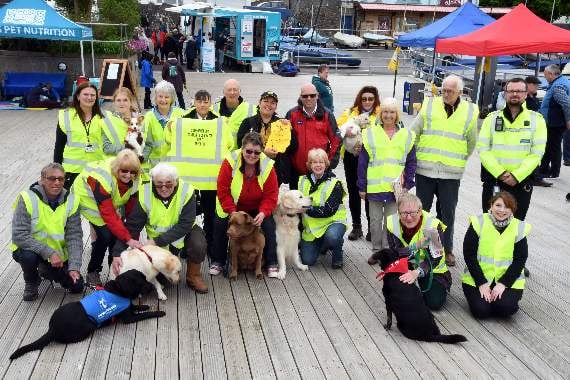
Local town and community councils are to be asked by Pembrokeshire County Council for their support in combating the problems experienced by irresponsible dog ownership.
Pembrokeshire and other county councils across Wales have met with the Welsh Government to highlight the impact that dog-related problems have on local authority services - and the financial pressures it places on them.
Approximately £300,000 was spent on dealing with dog-related problems in Pembrokeshire in 2014/15 not including the breeding of dogs. These issues include stray dogs, micro-chipping, dangerous dogs, the clearing of dog mess, disposal of dog waste, and nuisance from barking dogs as examples.
Mark Elliott, head of public protection, says Pembrokeshire and other local authorities believe a sustainable income stream needs to be developed to meet the cost of tackling dog-related issues.




“We are exploring the possibility of introducing a voluntary annual dog registration scheme in Pembrokeshire with the income going to dog welfare and control, to ensure these services are available in the future,” he said.
Such an income, he said, would also provide funding for work with town and community councils and community groups to combat the behaviour of the irresponsible dog owners.
“We will be asking all town and community councils in Pembrokeshire for their support in approaching Cabinet Secretary Lesley Griffiths AM, regarding dog-related problems in their communities and the need to provide a sustainable income stream to combat this,” he said.
Pembrokeshire’s services overview and scrutiny committee has already written to the cabinet secretary to express its support for a reasonable annual dog registration fee.
Clr. Pat Davies, cabinet member for housing and regulatory services, said she was concerned over the sustainability of the dog warden service.
“Due to financial pressures across the authority there are limited resources to deal with dog issues and departments are looking for further cost reductions,” she said.
“However, together with town and community councils, we hope that we may be able to provide acceptable solutions to deal with the innumerable dog issues. It is anticipated that more town and community councils will become involved with schemes and this will be presented to the representatives of town and community councils at a scheduled meeting in March.”
Comments
We've recently changed our login process. If you have an account for commenting, you will need to re-register on the login window.
This article has no comments yet. Be the first to leave a comment.