
Two RNLI lifeboat stations in Pembrokeshire are set to see changes as the charity adapts to the changing needs of its volunteers and the communities it serves
In the Royal National Lifeboat Institution’s (RNLI) third century of lifesaving, the charity’s rescue work is increasing in demand and as vital as ever – but the way people are using the coast and the water is changing, which will require an evolutionary response from the RNLI.
Compelling data, provided by RNLI lifeboat crews, lifeguards and partners, and compiled over many years, shows that the majority of incidents the charity’s lifeboats respond to are now within the operational capabilities of an inshore lifeboat.
Between 2017-2024, 98% of the RNLI’s lifeboat response was within 10 nautical miles of the shore, 1.8% was between 10 and 25 nautical miles and just 0.2% of incidents were at a range greater than 25 nautical miles offshore.
RNLI lifeboats responded to 9,058 operational services in 2025, over three and half times what was expected of us 50 years ago.
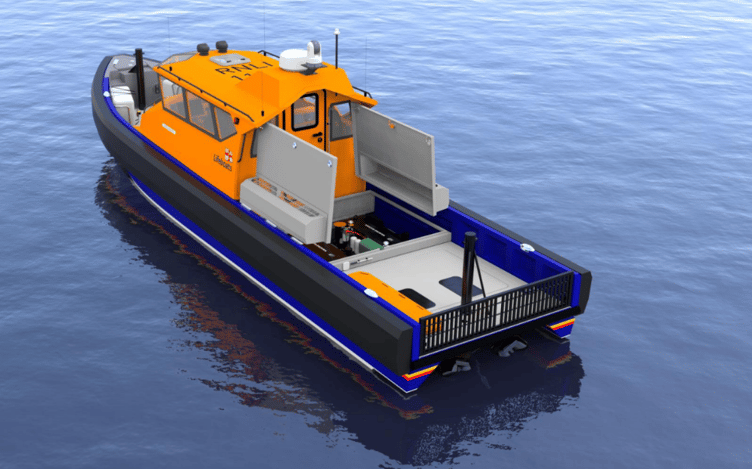
In Wales, four RNLI lifeboats stations will see a change in asset. Trent class lifeboats which are currently operational in Fishguard and Holyhead will be replaced by the RNLI’s new Coastal Lifeboat.
Angle’s Tamar class lifeboat will be replaced by the Coastal Lifeboat.
Rhyl will be allocated the new Atlantic 85 Mk4 lifeboat, which will replace the current Shannon class lifeboat.
The RNLI’s Lifeboat Fleet Strategy is designed to ensure that the charity has the most appropriate lifeboats in the right places which will save the greatest number of lives in the most effective way and, will crucially, keep our people safe.
The RNLI has reviewed its lifeboat fleet laydown and has developed a considered plan, to be delivered over the next 15 years, to ensure it meets the changing needs of its volunteers, supporters and the communities we serve.



The second phase of lifeboat asset changes, which will take effect between 2028-2030, have been outlined in the strategy and the affected lifeboat stations have been informed. Twenty four lifeboat stations, out of the 238 which operate around the UK and Ireland, will undergo a lifeboat capability change in this period.
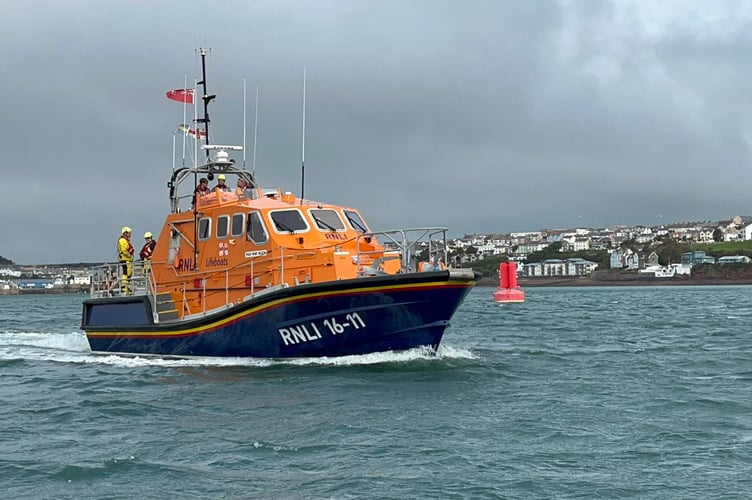
It will see the modernisation of the charity’s lifeboat fleet through the gradual exit of the Trent class All Weather Lifeboat, which first entered service in 1994, by the end of 2028.
It will also see a significant capability upgrade to Shannon all-weather lifeboat and the Atlantic 85 inshore lifeboat, together with the introduction of the new Coastal Lifeboat class in 2028.
Careful consideration has been given to the age, capabilities, location and pattern of lifeboats around the coast of the UK and Ireland, in response to the changing nature of lifesaving.
This work has been informed by changes in search and rescue technology, and it has drawn on a combination of in-depth data, insights and specialist knowledge. Numerous potential options have been explored, tested and refined to meet different lifesaving scenarios.
Peter Sparkes, RNLI Chief Executive, said: “The RNLI has constantly evolved and improved our service over 202 years. We make evidence-based decisions and strive to ensure that we have the right lifeboats in the right places, at the right time to save as many lives as possible around the coast of the UK and Ireland and, crucially, to enable us to bring our selfless, dedicated people home safely.
“We are responding to the changing nature of lifesaving at sea by adapting our service to ensure it is fit for our nations' future needs.
“What will never change is our charity’s purpose, to save lives at sea and our mission, to save every one.
“We have a responsibility to our volunteer crews to make sure we are providing them with the most capable lifeboat, personal protective equipment and best training to enable them to save lives at sea as safely and effectively as possible.
“And as a charity, we must also be clear that we are spending our donors’ money wisely in the right areas and where it will have the most impact. Our 2040 Lifeboat Fleet Strategy provides us with the guiding principles, clear priorities, and actionable information necessary to make these decisions.
“The changes we are announcing now are fundamental to meeting our goal of a future-fit and sustainable lifesaving service that keeps our own people safe and enables us to save every one we can.”
A spokesperson for Angle RNLI said: “We’re excited to announce that in 2029 Angle Lifeboat Station (Milford Haven) will receive a brand new world-class lifeboat incorporating the latest in technology and crew comfort allowing our volunteers to continue doing what they do best, saving lives at sea.
“In 2029 (exact date TBC) Angle Lifeboat Station will receive a new CLB (Coastal Lifeboat) a new All-Weather Lifeboat capable of operating up to 25NM offshore with a top speed of 35 knots which will allow us to reach those that we rescue faster. This is part of the RNLI’s 2040 Lifeboat Fleet Strategy.
“Our current Tamar Class Lifeboat ‘Mark Mason’ has served the station brilliantly, and we’ll always be proud of the lives we’ve saved and the people we have rescued while Mark Mason has been on service.
“Thanks to our supporters and volunteers, we’ve been evolving our lifeboats and technology for over 200 years. The CLB is the next step in making sure we’re fit for the future.
“We’ll keep working alongside our flank lifeboat stations and other emergency services to provide lifesaving cover along this stretch of coast just as we always have.
“Thank you to everyone who has supported our station over the years. We’re proud of our past, excited for the future, and ready for the next chapter of lifesaving.”
A spokesperson for Fishguard RNLI stated: “Last week, crew and volunteers at Fishguard RNLI met with representatives of the regional management team for an update on the RNLI’s 2040 Lifeboat Fleet Strategy and the exciting changes coming to our station in the coming years, now shared publicly.
“Operational and rescue data shows that demand is changing, particularly with increased recreational use of the coast, including swimming and paddlesports. Our fleet must evolve to meet these changing needs.
“A key part of this change is the introduction of the new Coastal Lifeboat—an 11-metre, self-righting, water-jet-propelled lifeboat. Shaped by volunteer input and equipped with the latest marine technology, its optimal area of operation will be within 10 nautical miles of the coast, while retaining the capability to operate up to 25 nautical miles offshore.
“Our station is one of those selected to receive a new Coastal Lifeboat which, combined with the existing D-class inshore lifeboat provides the most appropriate lifesaving capability for our area.
“Alongside our flanking stations at New Quay, Cardigan and St Davids, we will continue to provide lifesaving cover across South Cardigan Bay and work closely with other emergency services when required.
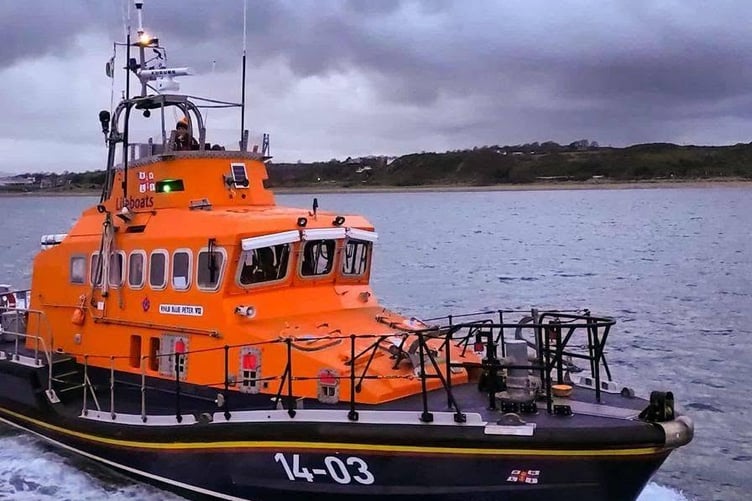
“The RNLI has announced that all Trent-class all-weather lifeboats will leave service by the end of 2028. For Fishguard, this means eventually saying goodbye to Blue Peter VII.
“Arriving in 1994 and funded by the 1993 Blue Peter “Pieces of Eight” appeal, she remains the only all-weather lifeboat to carry the iconic Blue Peter name.
“By the time she leaves Fishguard, she will have given 34 years of service to the station—a remarkable testament to the skill and dedication of generations of volunteer crew and station coxswain and mechanics.
“Blue Peter VII is a special part of Fishguard’s station and local heritage. When the time comes, we hope to give her the farewell she deserves.
“Until then, we will continue to train on and operate the assets we have. We are excited for this next chapter in our stations history, and look forward to be able to share more information with you as it becomes available.”
The RNLI’s Lifeboat Fleet Strategy should be seen in the context of a 365/24/7 all-weather search and rescue service. It carefully considers the needs of an individual lifeboat station nested within the wider service around the Irish and UK Coastline.
A spokesperson for the RNLI said: “Our layered and integrated lifesaving service, which incorporates water-safety training, lifeguards and lifeboats, will start on shore and work out to a range of 75 nautical miles. We are optimising the capability of all our lifeboats, whilst rationalising legacy classes of the all-weather lifeboat fleet, investing in technology and newer, far more capable boats.
“Use of the sea around the UK and Ireland has changed profoundly over the last 50 years. Far fewer lifeboat services are to boats and vessels, increasingly we are responding to people who start out from the beach and use the coast for recreational purposes, such as open water swimming, kayaking and paddleboarding.
“When deciding which lifeboats to place at a station, the RNLI considers the capabilities across flanking stations and other search and rescue services to ensure coverage and meet the lifesaving demand.”
Comments
We've recently changed our login process. If you have an account for commenting, you will need to re-register on the login window.
This article has no comments yet. Be the first to leave a comment.