
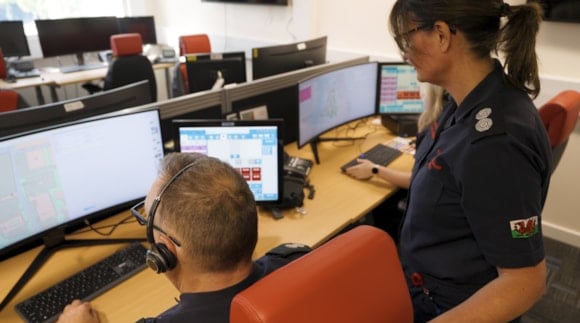
Mid and West Wales Fire and Rescue Service is celebrating the dedicated professionals behind every emergency response - its Joint Fire Control colleagues, the true ‘heroes in headsets’.
Operating on behalf of both South Wales Fire and Rescue Service and Mid and West Wales Fire and Rescue Service, Joint Fire Control provides the vital link between communities in need and emergency responders.
Every emergency call received, every appliance mobilised and every incident managed begins with the expertise and professionalism of our control room teams.
This summer presented significant operational challenges, with wildfire incidents affecting communities across Wales. While firefighters worked tirelessly on the incident ground, Joint Fire Control colleagues maintained operational cover across South and Mid and West Wales throughout periods of sustained demand.
The team worked around the clock behind the scenes, managing calls, coordinating resources and supporting operational crews throughout prolonged and complex incidents.
From July 19 to September 1, Joint Fire Control:
- Received 8,466 emergency calls, with a peak of 1,006 calls on 13 August alone
- Mobilised 1,232 fire appliances and specialist resources from 11 August to 1 September
Their ability to remain calm under pressure, assess rapidly changing situations and coordinate resources effectively was critical to ensuring communities received the help they needed when they needed it most.
Joint Fire Control colleagues shared their experiences of working through this summer's wildfire activity.



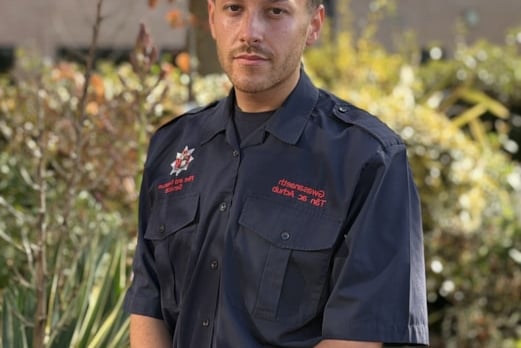
MAWWFRS Control Room Firefighter Walker said:"I started in Fire Control in February and became part of the watch in May after completing my assessments. I was still relatively new to the role, so nothing could have fully prepared me for what wildfire season would bring.
“The biggest thing that stands out to me was the large volume of calls coming into the control room, our calls peaked to 1,006 calls in one day. With appliances committed to incidents across the Service, calls continued to stack up while we waited for resources to become available. There was always something happening, and keeping track of everything during such a busy period was a real challenge.
“One thing I will always remember is how everyone pulled together. I responded to recall to duty on numerous occasions to help manage the call volumes and incident numbers. The support from colleagues within Control and across other watches was amazing, and everyone did what they could to help each other through it.
“It was also great to see support coming from other fire and rescue services across the UK. It showed that, during such a challenging time, the wider fire and rescue community was willing to come together to support one another.
“Having only been in Control for a few months before wildfire season hit, it was a huge learning experience. It gave me a real appreciation of the pressures of the role and the importance of teamwork. I’m proud to have been part of the team and to have seen first-hand the dedication everyone showed when it mattered most."
SWFRS Watch Manager Hughes said:"We have three call takers and two radio operators dealing with fire calls, radio messages, make-up messages and requests for support. At times, between South and Mid Wales, we were attending 30 separate incidents, with more than 50 waiting to be assessed for response.
“The fire lines are still ringing.
“Appliances show as white for available, black for unavailable and red for committed. There was regularly so much red and black that the appliances left to provide fire cover across SWFRS were frighteningly few. We didn’t have relief crews, only the next watch coming on duty.
“The fire lines are still ringing.
“In 22 years of grass fire seasons, people have always responded to recall. This year, watches were on their knees with tiredness.
“Somehow, we answered most calls, mobilised resources, managed the radio, arranged reliefs and refreshments, and kept going, knowing tomorrow would bring more of the same.
“We just kept going."
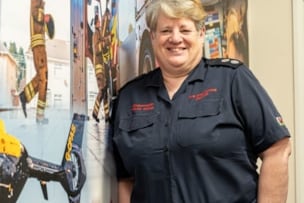
Natalie Pearce, Group Manager Joint Fire Control, said: "In my 28 years working in fire control, I have experienced some incredibly busy periods, but this summer was among the most demanding.
"The volume of calls, the number of major incidents and the sustained pressure on our teams were extraordinary. We had days when calls were coming in almost constantly, while colleagues were also managing resources, supporting firefighters and keeping track of incidents across both service areas.
"We had to adapt quickly, bringing in colleagues from other roles, making use of every available desk and working long hours to maintain the response. I'm incredibly proud of how everyone pulled together, including the support we received from colleagues across both services and our emergency service partners."
This month, Mid and West Wales Fire and Rescue Service welcomed the opportunity to contribute to national discussions on climate resilience following a summer that saw unprecedented wildfire activity across Wales.
Chief Fire Officer Craig Flannery represented the Service at the Wales Climate Change and Resilience Summit, convened by Welsh Government.
The summit brought together organisations from across Wales to reflect on lessons learned from recent wildfire incidents and consider how partnership working, preparedness and collective action can help communities and public services respond to future challenges.
Speaking following the event, Chief Fire Officer Craig Flannery said:"The unprecedented wildfires experienced across Wales this summer demonstrate how the risks facing our communities are changing.
“The impacts of climate change are no longer something we can consider in the future. They are happening now, affecting our communities, our environment and the demands placed on emergency services and public bodies across Wales.
“Protecting our communities, our people and our environment requires a whole-system approach. No single organisation can meet these challenges alone. Building resilience for the future will depend on strong partnership working, shared learning and a collective commitment to preparing for and responding to emerging risks.
“The summit provided an important opportunity to identify learning, share experiences, strengthen collaboration and consider how we can collectively enhance resilience across Wales,” he continued.
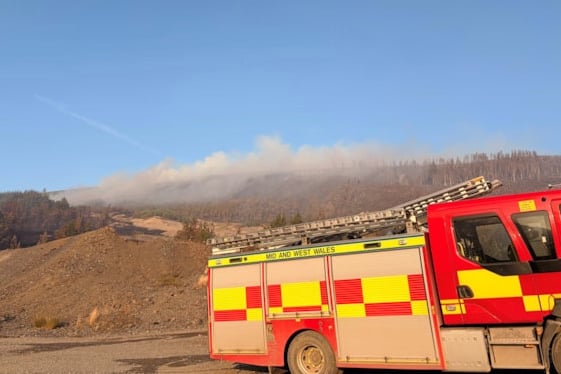
“The experiences of this summer should serve as a wake-up call for all of us. They reinforce the need not only to understand how risks are evolving, but also to ensure we are prepared for the challenges that autumn and winter may bring.
“Resilience cannot be delivered by any one organisation alone. It requires public services across Wales to work together, plan together and act together. By doing so, we can better protect our communities, our people and our environment, both today and for future generations,” he added.
The Service's contribution to the summit was informed by the experiences of firefighters, Joint Fire Control personnel, support staff and partner organisations who worked throughout the summer to protect communities, property and the natural environment during periods of significant wildfire activity.
As part of its commitment to keeping communities safe, MAWWFRS continues to work closely with partners across Wales to strengthen preparedness, share learning from major incidents and enhance resilience to a range of emerging risks, including extreme weather events.
The Service says it remains committed to playing its part in supporting a collaborative, Wales-wide approach to resilience, ensuring communities are better prepared for the challenges of today and the future.
Comments
We've recently changed our login process. If you have an account for commenting, you will need to re-register on the login window.
This article has no comments yet. Be the first to leave a comment.