

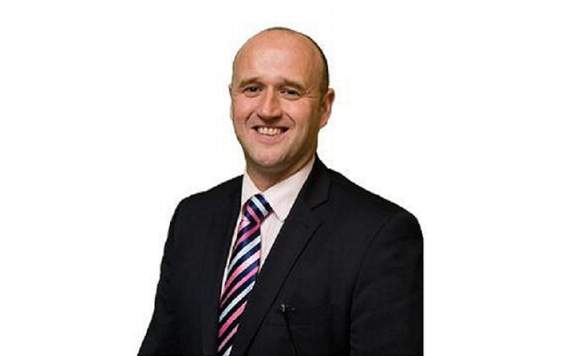
In the first of a series of exclusive articles following the result of the General Election, Dafydd Llywelyn, Police and Crime Commissioner for Dyfed-Powys, discusses the implications for the review of the police funding formula.
Now that the dust is settling after an extraordinary election many will hope, as I do, that we can return to dealing with many critical issues without such distractions. I, for one, feel the election was totally unnecessary and now is a time to focus once again on reforming public services.
Policing is no different to other public services waiting for answers in relation to policy, strategy and, most importantly, funding. Time must be afforded to learn the practical operational lessons from the terrorist attacks in Manchester and London; however, time is against all of us when it comes to setting new policies and strategies that are likely to take years to become embedded and bear fruit. In particular, we would all agree that the PREVENT Strategy must be reviewed in order for this activity to be re-invigorated.
Alongside these operational and policy issues, the decisive consultation on a new funding formula for policing is imminent and there is no time to lose on this matter that will shape the service over the next decade.




A considerable amount of effort and resource has been placed during recent years in transforming the service and the reduction in resources has been well documented, but the reality is that the core funding distributed in the Home Office’s Police Grant is the life blood of every force.
This distribution of finance is critical, but its allocation through a complex formula, altered at various moments in time, can be seen as problematic due to the complex nature of our population distribution, deprivation variances and, of course, the acute pressures for service delivery in certain locations of the United Kingdom due to the topography. The difficulty of this task became evident with the withdrawal of the process in 2015/16 where inaccuracies were identified and the recent delay in announcing the most recent attempt to review the formula must surely be a sign of how difficult a task it is.
Stagnation and uncertainty
My experience of the process was one I felt initially engaged with. I met the then Policing Minister Brandon Lewis and hosted Home Office officials within the force as well as having an opportunity to provide detailed evidence of the specific pressures facing my force.
However, my initial confidence in the process has been eroded with cancelled meetings, delayed announcements and limited detail being shared widely. These processes will always result in hearsay and rumour but the calling of a General Election has certainly resulted in a period of stagnation and I, for one, wonder whether, in light of the recent incidents, this will remain a ‘work in progress’ position for the 2017/18 financial year.
It is understandable that things have gone quiet during the election period, but let us not lose sight of the fact that the initial consultation period had already been delayed and this delay, having now been exacerbated, is detrimental to medium and long-term financial plans. This puts further uncertainty into the minds of decision makers for a whole series of questions, not least the fundamental question of being able to afford the current level of police officers and staff or being able to increase numbers.
Complex landscape
Workforce planning and modelling to complement the changing demand landscape of a shift from volume crime to vulnerability and safeguarding is impossible without knowing what grant will be forthcoming in less than 12 months’ time. I strongly advocate that the initial timescales are reviewed and that the implementation of any new formula is delayed until 2019/20 with 2018/19 being used as a transition year allowing all forces time to adjust. This was not the view of the Policing Minister who also discounted any dampening period in our initial discussions in December 2016.
The reality is that police funding is complex and it can be argued that this is a direct result of the complex needs and pressures of the diverse communities served by our police forces. Throw into the mix the impact of different governance structures and rules in relation to funding such as the local council tax referendums in England and it is no surprise that this already complex landscape has seen an increased divergence to the way in which forces are funded.
A comparison of council tax contributions, I would argue, is a critical indicator of where local representatives, most recently in the form of PCCs, have flexed their power to raise funds through local taxation. A direct comparison can be made between Wales and England where the gearing from the local council tax contribution is higher in Wales with less divergence between forces than in England where there is a significant difference between force areas.
Scotland, where local authorities have been given the freedom to appoint local officers to support specific projects, has seen an increase in officer numbers, a fact many forces south of the border must surely be envious of. However, these observations must not be mistaken as supporting the increased level of financial contribution from local council tax, to plug the gap of the central Police Grant, but are discussed merely to highlight the complex nature of the funding arrangements (I benefited from the lack of a referendum cap and raised my local precept for 2017/18 by 6.9 per cent).
Political will
Of course, all public services are under financial pressure and one way to address this is to develop an increased level of collaborative arrangements and bleeding across of budgets that have historically been held in silos. The endeavour to work collaboratively has been advocated for years, but it is now becoming more evident that not only is there an understanding of the benefits, but a genuine change in approach.
The opportunity within the devolved administrations of Scotland, Wales and Northern Ireland to legislate for this has become evident and further opportunities are likely with increased devolution of decision making in England. However, this will only be successful if the political will is behind it and that those in critical roles throw away their egos and the desire to make a name for themselves in order to deliver improved public services for the public. The sharing of budgets for activities that impact improved health and well-being, increase community cohesion and reduce crime and anti-social behaviour is common sense but not common place, yet.
I would urge readers to take note of the Welsh Government’s Well-being of Future Generations (Wales) Act 2015 and the way in which collectively through Public Service Boards public bodies are being asked to consider the long-term impact of decisions. Policing is not yet devolved in Wales but all four of the PCCs are taking an active role as a non-statutory partner and I anticipate tangible benefits will be realised within the next few years. The challenge is therefore clear, to deliver a funding formula that can be broadly agreed as fair without undermining the current arrangements, thus allowing for innovative relationships to flourish. The challenge is clear, but not easy.
Comments
We've recently changed our login process. If you have an account for commenting, you will need to re-register on the login window.
This article has no comments yet. Be the first to leave a comment.